TEETH4LIFE.ORG.UK

Gingivitis and periodontitis

I am no expert in perio, but I think I have a general grasp adequate for most of my patients. I was a bit disappointed with the new classification as it makes my graphics for the public incorrect. But the graphics indicate to the public their gum health. It will take seconds for those who understand the new periodontal classification to modify the score to a graphic your patient may understand.
I can't give advice, but these are my main resources.

Picture
Professor Iain Chapple PhD, BDS, FDSRCPS, FDSRCS, CCST (Rest Dent)School of Dentistry
Professor of Periodontology and Consultant in Restorative Dentistry
Head of Research for Institute of Clinical Sciences

​
I have seen a few lectures by Iain in person and, more recently, online.
I have tried to follow his advice in the videos I have made. The videos in the App are for the public. His recent videos explaining the links between general health and oral health are excellent, but I didn't fully understand them. 
I don't think I was alone. He is one of the best lecturers I have ever seen.
He managed to make perio interesting. 

Picture
A few years ago, I went to a course and saw Phil Ower give a practical lecture on Perio, periocourses . I sent this video to a patient following the procedure and had an unexpected excellent result.


Ian Dunn has taken over, and his webinars are excellent.
Picture
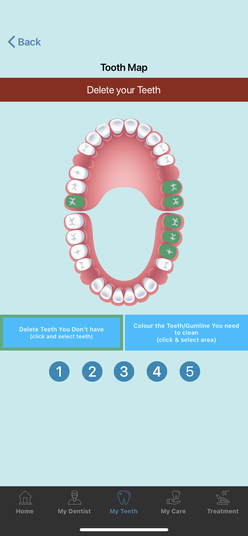
This is the tooth Map in the App.
I gave business cards with the patient's details on one side. You can advertise yourself on the other.


Instructions here and templates for business cards
care4teeth.co.uk
 
1. Toothbushing
2. Interdental brushing
3. Pocket cleaning
4. Diet advice
5. Habit formation


Below is the template that may help protect you from
​periodontal litigation. For the instructions view registration page care4life.co.uk


For the template below.
 Following your appointment today. These are your scores.
BPE 434543
BEWE 232322
Download our free teeth4ife dental App available on the App Store and Google Play.
Personalise the App in the My Teeth section, add your scores and risk factors, then view your scorecard.


Type in our Bristol to find me, teeth4life practice, and my contact details.
For more current impartial advice subscribe to the teeth4life YouTube Channel. This animation explains how oral health is directly linked to general health.
https://youtu.be/9Tbp6zi7wnc
Please look at the video on Oral Cancer as you need to monitor yourself for this largely preventable, and deadly disease. Set a monthly reminder in the My Teeth, scorecard section.
https://youtu.be/9IzyuFDpHUY


Regards,
Dr Antony Smith B.D.S D.P.D.S
Picture


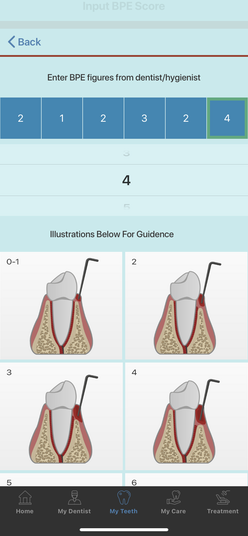
I roughly used the existing BPE from a year ago.
Many dentists and hygienists are unsure about the new classification, but I think this picture gives an understanding of the problem for the public. 
​Adjust the score for your patients.

The video below indicates how and why to clean a pocket. Number 3 on the Tooth Map above.

​

mouthwashes

The following was added 5/10/2025 with help from AI, although I have checked it and it seems accurate.
Compare effectiveness of hypochlorous, hypochlorite, Listerine, chlorhexidine,
and fluo-ride mouthwashes in preventing oral diseasesand maintaining health.


Mouthwashes are commonly used oral hygiene products designed to prevent oral dis-
eases, maintain health, and promote fresh breath. Various formulations contain active
ingredients such as hypochlorous acid, sodium hypochlorite, Listerine, chlorhexidine,
and fluoride, each with distinct antimicrobial properties and effectiveness in combat-
ing oral pathogens. The comparative effectiveness of these mouthwashes is notable
not only for their roles in dental care but also due to varying safety profiles and
potential side effects associated with their use.[1][2][3][4]
Hypochlorous acid and sodium hypochlorite are recognized for their potent antibac-
terial properties, often utilized in clinical settings for infection control and gingivitis
treatment. Studies indicate that hypochlorous mouthwashes are effective against
plaque and well-tolerated by users, presenting a promising alternative to traditional
agents like chlorhexidine, which, while effective, can cause staining and other side
effects.[5][6] Meanwhile, Listerine, an over-the-counter mouthwash, is acclaimed for
its ability to significantly reduce plaque and gingivitis through a blend of essential oils,
enhancing overall gum health.[7][8]
Chlorhexidine is particularly lauded for its broad-spectrum activity against bacteria,
although its use is sometimes limited by adverse effects, including staining and
altered taste perception.[9] Fluoride mouthwashes, on the other hand, primarily
serve to strengthen tooth enamel and prevent cavities, contributing to oral health
maintenance but offering limited benefits against gum disease.[10][11] These dis-
tinctions highlight the importance of individualized oral care strategies, especially in
populations with varying health needs and preferences.
The ongoing discourse around the efficacy, safety, and suitability of different mouth-
wash formulations underscores the significance of informed choices in oral hygiene.
As research continues to evolve, understanding the comparative effectiveness of
these products will remain vital for clinicians and consumers alike in the quest for
optimal oral health solutions.[12][13]
Hypochlorous Acid
Hypochlorous acid (HOCl) is recognized as a potent antimicrobial agent that plays a
significant role in dental health and infection control. It is produced naturally by the
human immune system, specifically by neutrophils, which generate HOCl to combat
invading pathogens. This compound has garnered attention for its efficacy and safety
compared to traditional disinfectants, such as sodium hypochlorite[1][2].
Mechanism of Action
The mechanism of action of HOCl is multifaceted, involving the disruption of various
cellular components of microorganisms. HOCl penetrates microbial cell walls and
alters the oxidation-reduction potential within the cells, leading to the inactivation
of essential enzymes and cellular processes[3][4]. In dental applications, HOCl can
effectively oxidize the polysaccharide matrix of biofilms, such as dental plaque,rendering them nonpathogenic[3]. This action is particularly relevant in addressing
infections caused by resistant bacterial strains, as it operates through different
pathways than conventional antibiotics, which are often targeted towards specific
bacterial components like the cell wall or ribosomes[1][5].
Advantages Over Traditional Antimicrobials
Hypochlorous acid is distinct from other antimicrobial agents due to its lower toxicity
and less disruptive effects on the oral microbiome. Traditional mouthwashes, such as
those containing chlorhexidine or alcohol, may adversely affect the balance of the
oral microbiota, leading to potential complications such as increased blood pressure
or long-term microbiome alterations[2][6]. In contrast, HOCl is well-tolerated, and its
ability to respect the balance of the oral microbiome while still targeting pathogens
makes it a promising option for therapeutic use in dentistry[2][7].
Clinical Applications
The application of HOCl in clinical settings has been supported by various studies
that confirm its antimicrobial efficacy. It has been utilized in products designed for oral
rinsing and wound care, emphasizing its role in preventing infections and promoting
healing in dental and surgical contexts[7][8]. Commercially available solutions of
HOCl are emerging as alternatives in dental offices, highlighting its practicality and
effectiveness in maintaining oral health[2][4].
Sodium Hypochlorite
Sodium hypochlorite (NaOCl) is a chemical compound widely recognized for its
antimicrobial properties, making it an effective agent in various dental applications,
particularly in root canal treatments. It is commonly utilized as an irrigant during
these procedures due to its ability to dissolve organic tissue, such as pulp and
predentin, and is typically used in concentrations of 0.5% or lower to mitigate cytotoxic
effects[9][7].
Mechanism of Action
In aqueous solutions, sodium hypochlorite undergoes hydrolysis to produce
hypochlorous acid and hypochlorite ions. This dual species can penetrate microbial
cell walls, altering their oxidation-reduction potential and leading to the inactivation of
key cellular enzymes involved in energy production and metabolism[3]. This mech-
anism is particularly effective against the polysaccharide matrix of dental plaque,
rendering biofilms nonpathogenic and aiding in the prevention of oral diseases[3][9].
Health Effects and Safety
While sodium hypochlorite is effective as an antimicrobial agent, it is also important
to consider its safety profile. Exposure to hypochlorite solutions can be irritating and
corrosive to the eyes, skin, and respiratory tract, with potential health risks includinginflammation and necrosis upon contact with periapical tissues[6][9]. Proper handling
and storage guidelines are critical, as sodium hypochlorite can liberate dangerous
gases when mixed with acids or ammonia, and anhydrous forms may pose explosive
risks[6].
Applications in Oral Health
Sodium hypochlorite is not only utilized in root canal therapy but also has broader
applications in wound care and infection prevention. It is often used to clean and
disinfect cuts, scrapes, and burns due to its antiseptic properties, helping to dissolve
dead tissue and inhibit the growth of pathogens[9][7]. The compound's effectiveness
as a disinfectant makes it a valuable tool in maintaining oral health and preventing
infection, particularly in surgical settings[7].
Listerine
Listerine® is a popular mouthwash known for its effectiveness in promoting oral
health by targeting plaque and gingivitis. Formulated with essential oils such as
eucalyptol, menthol, thymol, and methyl salicylate, Listerine demonstrates strong
antimicrobial properties that help eliminate 99.9% of germs responsible for bad
breath and oral diseases[10][11]. Regular use of Listerine has been clinically proven
to reduce gingivitis and plaque accumulation, making it a beneficial addition to a daily
oral hygiene routine[12][3].
Chlorhexidine
Chlorhexidine is a widely used antiseptic and disinfectant known for its broad-spec-
trum antimicrobial activity. Its mechanism of action involves the release of positively
charged chlorhexidine cations, which disrupt the cell membranes of bacteria, leading
to their inactivation and death[13][14]. This biocide is particularly effective against
both Gram-positive and Gram-negative bacteria, as well as fungi, demonstrating a
faster kill rate compared to other antiseptics like povidone-iodine[14].
Fluoride
Fluoride is a mineral that plays a crucial role in oral health, particularly in the
prevention of dental caries (cavities). Mouthwashes containing fluoride are widely
recognized for their ability to strengthen tooth enamel by forming a protective film
on the teeth, which enhances resistance to decay and supports remineralization
processes[15][16]. Despite its effectiveness in cavity prevention, fluoride mouth-
washes do not provide protection against gum diseases such as gingivitis or peri-
odontitis[15].
Regulatory RequirementsManufacturers of fluoride-containing mouthrinses are obligated to demonstrate com-
pliance with specific standards regarding fluoride concentration and the effectiveness
of their products. For example, they must conduct clinical anticaries studies to validate
claims of decay prevention. Additionally, claims related to controlling gingivitis must
be substantiated by evidence showing a statistically significant reduction in gingival
inflammation and plaque formation[17].
Benefits and Limitations
While fluoride is effective in preventing dental caries, it is essential to use it cautiously,
as excessive ingestion can lead to dental and skeletal fluorosis, conditions that
negatively affect teeth and bones[18]. The efficacy of fluoride in mouthwashes lies
primarily in its anticariogenic properties, although its bactericidal effects in vivo
remain less clear[16]. Studies indicate that fluoride mouthwashes can reduce plaque
and gingivitis when used in conjunction with proper oral hygiene practices, but they
are not sufficient as standalone treatments for periodontal diseases[16].
Comparative Effectiveness
Mouthwashes play a crucial role in maintaining oral health by reducing plaque, pre-
venting gingivitis, and ensuring overall mouth freshness. Various active ingredients
in mouthwashes, such as hypochlorous acid, hypochlorite, Listerine, chlorhexidine,
and fluoride, offer different levels of effectiveness against oral diseases.
Hypochlorous and Hypochlorite Mouthwashes
Recent studies have confirmed that hypochlorous acid and hypochlorite mouth-
washes exhibit significant bactericidal properties, with results indicating they are
effective in treating gingivitis when used as adjuncts to mechanical plaque control
methods[4][19]. In particular, 0.2% sodium hypochlorite has been shown to be as
effective as 0.2% chlorhexidine for treating gingivitis[20]. Moreover, a clinical study
focusing on the elderly demonstrated that the use of hypochlorous mouthwash was
well-tolerated, with participants reporting minimal adverse effects[4]. This suggests
a promising safety profile alongside its effectiveness.
Chlorhexidine
Chlorhexidine is widely recognized for its strong antimicrobial properties. Studies
indicate that it is superior in controlling plaque compared to other agents like essential
oils, although no significant difference was found in the effectiveness of gingivitis
control[17]. Chlorhexidine, however, is associated with certain side effects, including
the potential for brown staining of teeth and tongue, which may limit its long-term
use[21].
ListerineListerine, a popular over-the-counter mouthwash, has been clinically proven to re-
duce both plaque and gingivitis when used regularly[11]. It contains a blend of es-
sential oils, which contribute to its effectiveness. Furthermore, Listerine's formulation
is designed to provide therapeutic benefits, addressing issues such as bad breath
and plaque control while also enhancing gum health[22][23].
Fluoride Mouthwash
Fluoride mouthwashes are primarily known for their ability to strengthen tooth enamel
and prevent cavities. They serve as an adjunct to regular brushing and flossing, par-
ticularly for individuals at a higher risk of dental caries[16]. While fluoride mouthwash
may not directly target gingivitis, its role in overall oral health maintenance cannot be
overlooked.
Comparative Insights
When comparing these mouthwash types, it becomes evident that each has dis-
tinct advantages and limitations. Hypochlorous and hypochlorite mouthwashes show
promise for their antibacterial efficacy and safety profile, particularly for older adults[-
4]. Chlorhexidine remains a potent option for plaque control but may deter some users
due to its side effects[21][17]. Listerine offers a balanced approach by addressing
multiple aspects of oral health[22][11]. Finally, fluoride mouthwash complements
the other types by focusing on cavity prevention, making it a valuable part of a
comprehensive oral hygiene routine[16].
References
[1]: Hypochlorous acid has emerged as a potential alternative to ...
[2]: Hypochlorous Acid and Game Changing Paradigms in Medicine ...
[3]: Clinical and Microbiological Efficacy of 0.25% Sodium Hypochlorite ...
[4]: Effectiveness of Acid-electrolyzed Functional Water for Mouth Wash
[5]: Swish and Smile: Finding Your Perfect Mouthwash Match
[6]: Medical Management Guidelines for Calcium Hypochlorite - CDC
[7]: Sodium hypochlorite topical (Dakin's Solution, HySept, and others)
[8]: Efficacy of different mouthwashes against COVID-19: A systematic ...
[9]: Sodium Hypochlorite Accidents During Root Canal Treatment - iCliniq
[10]: Listerine® is clinically proven to be 5x more effective than flossing ...
[11]: Can Listerine® Help with Gum Disease? - Humble Dentistry
[12]: The use of mouthwash containing essential oils (LISTERINE®) to ...
[13]: Chlorhexidine - Wikipedia
[14]: Mechanism of Action - Chlorhexidine Facts
[15]: Which Mouthwash Should You Use? - Schneider Family Dental
[16]: The 10 Best Mouthwashes for Fresher Breath and Fewer Cavities[17]: Mouthrinse (Mouthwash) - American Dental Association
[18]: Ingredients in Commercially Available Mouthwashes - ScienceDirect
[19]: Comparative evaluation of efficacy of 0.2% sodium hypochlorite (Hi ...
[20]: Comparative evaluation of efficacy of 0.2% sodium hypochlorite (Hi ...
[21]: Effects of hypochlorous acid mouthwash on salivary bacteria ...
[22]: Scene Marketing of Mouthwash: From Oral Freshness to Social ...
[23]: Mouthwash Market Report: Trends, Forecast and Competitive ...
[undefined]: All the benefits of CHX without the side effects | British Dental Journal


  • Home
    • RESOURCES >
      • APPLE
      • AUDIO BOOKS
      • FUTURE LEARN
      • YouTube
      • books
      • Peer Review & CPD
      • CLINICAL SUPPORT
      • MORAL SUPPORT
      • PRACTICE SUPPORT
    • CPD >
      • general CPD record
      • record CPD dental health service
    • CONTRIBUTERS >
      • TONY
      • KIRK
    • TERMS AND CONDITIONS >
      • COPYRIGHT INFORMATION
      • PRIVACY POLICY
  • PREVENTION
    • Oral Cancer
    • Gingivitis and Periodontitis
    • Erosion and Wear
    • CQC, GDC, MENTAL HEALTH
  • MID
    • examination
    • remineralisation
    • non-invasive
    • minimally invasive
    • filling materials
    • Periodontology MID
    • A new perspective
    • conclusions
    • more/ references
    • CAD CAM
    • SILVER DIAMINE FLUORIDE
    • 3D PRINTING >
      • 3D-DENTAL PLATFORM
    • CEREC BLOG
  • eHealth APP
    • APP HELP
    • REGISTRATION HELP >
      • PROFILE HELP
      • THERAPY VIDEO DOWNLOADS
      • TEXT HELP/MORE
    • PAYMENT UPDATE
    • DENTIST FEEDBACK
    • DCP FEEDBACK
    • PRACTICE MANAGER >
      • APP PITCHES,
    • MARKETING, RECEPTION VIDEOS >
      • MORE DOWNLOADS
      • MARKETING TEMPLATES
      • OHI VIDEOS
      • SOCIAL MEDIA VIDEOS
    • PROMOTED VIDEOS
    • FAQ
  • BLOG
    • ETHICS >
      • ETHICS BLOG
    • LDC v GDC v BDA
    • Events >
      • blog info
  • FUTURE?
    • Oral Cancer Screening
    • FD SUPPORT
    • DENFLIX
    • TELEDENTISTRY >
      • AMTA resource
      • AMTA TedTalk
      • COMPANIES
      • LEGAL TELEDENTISTRY
    • MID VIDEO COURSES
  • MY DENTAL HISTORY

​The information contained in this website is for general information purposes only. The information is provided by care4teeth limited and while we endeavour to keep the information up to date and correct, we make no representations or warranties of any kind, express or implied, about the completeness, accuracy, reliability, suitability or availability with respect to the website or the information, products, services, or related graphics contained on the site for any purpose. Any reliance you place on such information is therefore strictly at your own risk.
In no event will we be liable for any loss or damage including without limitation, indirect or consequential loss or damage, or any loss or damage whatsoever arising from loss of data or profits arising out of, or in connection with, the use of this website.
Through this website, you can link to other websites which are not under the control of tdentltd. We have no control over the nature, content and availability of those sites. The inclusion of any links does not necessarily imply a recommendation or endorse the views expressed within them.
Every effort is made to keep the website up and running smoothly. However, tdentltd takes no responsibility for, and will not be liable for, the site being temporarily unavailable due to technical issues beyond our control.​
  • Home
    • RESOURCES >
      • APPLE
      • AUDIO BOOKS
      • FUTURE LEARN
      • YouTube
      • books
      • Peer Review & CPD
      • CLINICAL SUPPORT
      • MORAL SUPPORT
      • PRACTICE SUPPORT
    • CPD >
      • general CPD record
      • record CPD dental health service
    • CONTRIBUTERS >
      • TONY
      • KIRK
    • TERMS AND CONDITIONS >
      • COPYRIGHT INFORMATION
      • PRIVACY POLICY
  • PREVENTION
    • Oral Cancer
    • Gingivitis and Periodontitis
    • Erosion and Wear
    • CQC, GDC, MENTAL HEALTH
  • MID
    • examination
    • remineralisation
    • non-invasive
    • minimally invasive
    • filling materials
    • Periodontology MID
    • A new perspective
    • conclusions
    • more/ references
    • CAD CAM
    • SILVER DIAMINE FLUORIDE
    • 3D PRINTING >
      • 3D-DENTAL PLATFORM
    • CEREC BLOG
  • eHealth APP
    • APP HELP
    • REGISTRATION HELP >
      • PROFILE HELP
      • THERAPY VIDEO DOWNLOADS
      • TEXT HELP/MORE
    • PAYMENT UPDATE
    • DENTIST FEEDBACK
    • DCP FEEDBACK
    • PRACTICE MANAGER >
      • APP PITCHES,
    • MARKETING, RECEPTION VIDEOS >
      • MORE DOWNLOADS
      • MARKETING TEMPLATES
      • OHI VIDEOS
      • SOCIAL MEDIA VIDEOS
    • PROMOTED VIDEOS
    • FAQ
  • BLOG
    • ETHICS >
      • ETHICS BLOG
    • LDC v GDC v BDA
    • Events >
      • blog info
  • FUTURE?
    • Oral Cancer Screening
    • FD SUPPORT
    • DENFLIX
    • TELEDENTISTRY >
      • AMTA resource
      • AMTA TedTalk
      • COMPANIES
      • LEGAL TELEDENTISTRY
    • MID VIDEO COURSES
  • MY DENTAL HISTORY